Rebuilding after rising water and storm intrusion
Flood Damage Repair for Commercial Buildings
Compared with a leak, flood damage repair for commercial buildings is broader, slower and more heavily documented.
Why Flood Repair Is Its Own Category
An interior plumbing failure and a flood can both leave a building wet, but they are very different repair problems. Flood damage repair for commercial buildings usually deals with water that came from outside, moved at some volume and carried sediment, debris and contaminants with it. It often covers the whole ground floor or below-grade areas instead of a single room, it reaches building systems that are low in the structure, and it frequently arrives together with community-wide disruption: utility outages, limited contractor availability, restricted access and heavy insurer and authority involvement.
Because of that, the repair planning process changes. The evaluation period is longer, more materials are typically removed, safety and regulatory checks matter more and the sequence of work is more tightly controlled. This guide explains how flood-related repair scope and planning generally differ from other commercial water damage, and what business owners and property managers should expect to organize.
This is a general guide. Flood conditions can involve structural, electrical, environmental, health and regulatory issues that require qualified professionals and local authorities. Nothing here is an assessment of your building or a conclusion about safety, contamination or coverage.
Sources of Flood and Storm Water
Understanding how water entered the building helps determine what might be affected and what must be corrected to prevent a repeat.
Rising or overland water
Rivers, coastal surge, heavy runoff or ponding can bring water in through doors, low openings and foundations.
Stormwater and drainage failure
Overwhelmed storm drains, blocked roof drains, failed sump systems or backed-up site drainage can flood a property even when no river is involved.
Wind-driven rain and roof or envelope damage
Storms can damage roofs, windows, doors and cladding, allowing water to reach interiors from above or the side.
Sewer and drain backup
Municipal or building drainage systems can back up during heavy rain, and the resulting water is treated with particular caution.
Whatever the source, the path of entry is part of the repair scope. Restoring interiors without correcting the opening, drainage problem or protection that allowed water in leaves the building exposed to the next event.
Safety and Access Before Any Repair
After a flood, the first questions are about whether the building can be entered at all, not about repair.
- Structural concerns. Floodwater can affect foundations, slabs, retaining elements and walls. Whether a building is safe to enter is a determination for qualified professionals and local authorities.
- Electrical hazards. Submerged or wet electrical equipment, panels and wiring are a serious hazard. Utilities and electrical systems should only be evaluated and re-energized by qualified, licensed professionals.
- Gas and fuel systems. Damaged gas lines, tanks or equipment need professional and utility attention.
- Contaminated water. Floodwater may contain sewage, chemicals, sediment and debris. Personal protection and handling requirements apply, and health-related questions should go to appropriate authorities and professionals.
- Access restrictions. Roads, utilities and building access may be controlled by authorities, and some buildings may be posted as unsafe until inspected.
Re-entry decisions, demolition permits and safety determinations are matters of local law and professional judgment. Follow directions from officials and qualified professionals rather than assumptions.
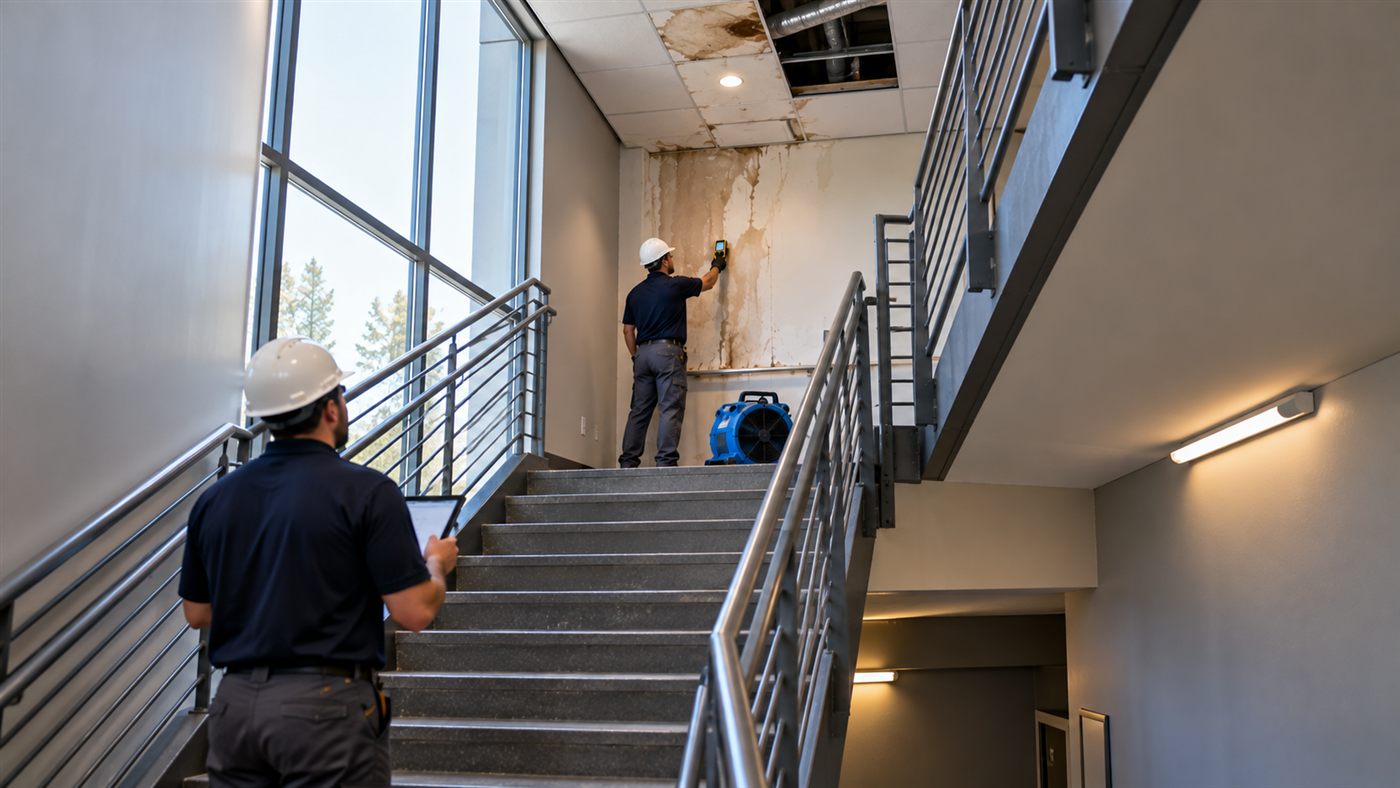
Assessing the Extent of Flood Damage
A flood repair assessment usually tries to answer several questions at once: how high did the water reach, how long did it stay, what type of water was it and which components were affected.
Key items evaluators commonly document
- High-water marks on walls, equipment and structures, to establish the depth and extent of impact.
- Duration of exposure, since materials wet for longer periods typically fare worse.
- Water type and contamination indicators, which influence what is removed and what precautions are taken.
- Building systems affected, including electrical distribution, HVAC equipment, elevators, plumbing, fire protection and controls.
- Envelope and foundation conditions, including doors, windows, walls and slabs.
- Contents and inventory affected, for separate documentation.
Why documentation is heavier
Flood losses commonly involve insurers, adjusters, lenders, authorities and sometimes disaster programs, so documentation expectations are higher. Photographs, video, dated notes, moisture logs, inventories and receipts are all useful. Keep records of temporary protection and cleanup, since those costs may need to be reported. Questions about coverage and claim requirements should be directed to your insurer and advisors.
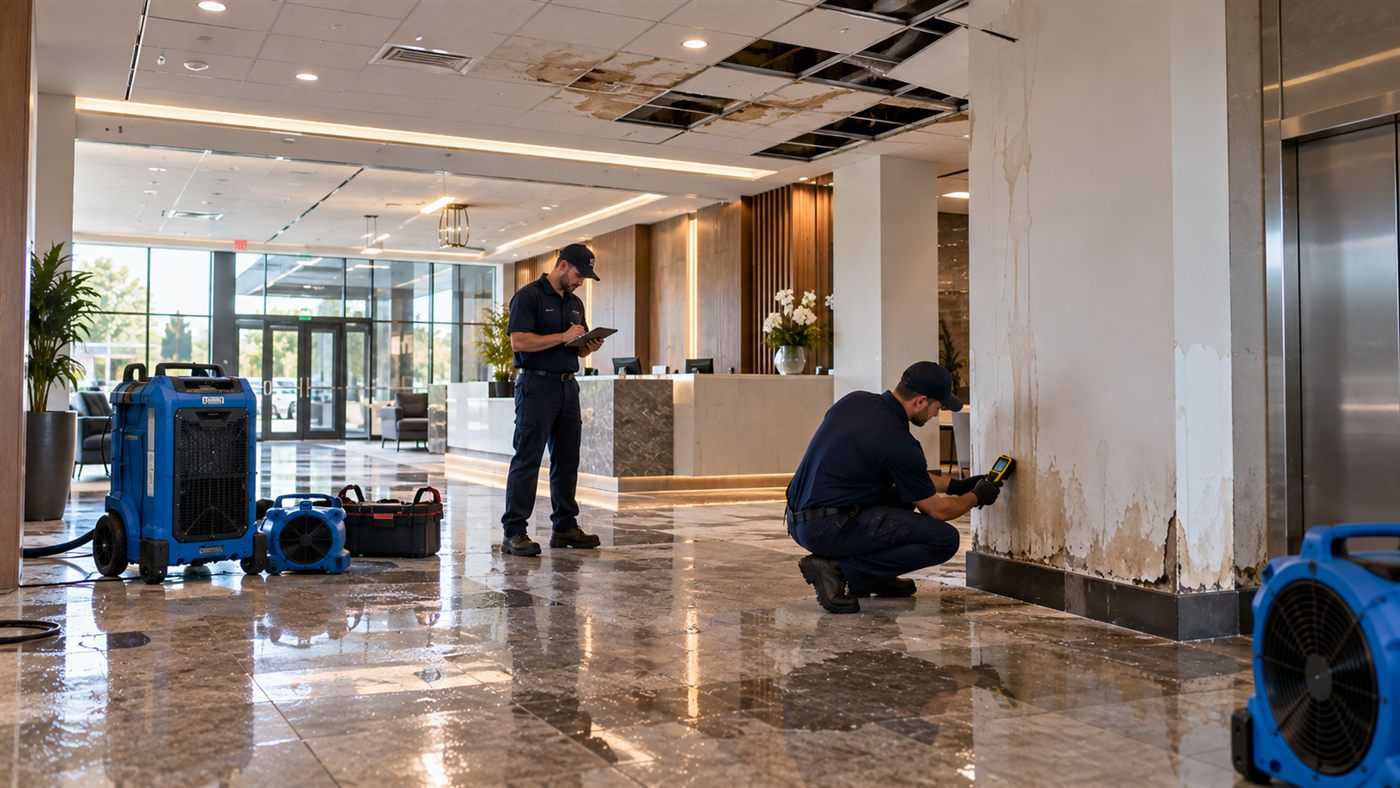
Building Components Commonly Affected by Flooding
Floodwater usually affects the lower parts of a building most, but wicking and humidity can extend the impact higher. The following components are commonly considered in flood repair scopes, and the real list depends entirely on conditions.
- Drywall and wall assemblies. Because water may rise well above the floor, walls are often opened or removed to a level determined by assessment, with insulation and cavity conditions examined.
- Insulation. Wet or contaminated insulation is commonly removed and replaced.
- Flooring and slabs. Carpet, pad, resilient flooring and wood are often removed. Slabs and subfloors may need cleaning, drying and moisture testing before new flooring is installed.
- Base, trim and millwork. Low-mounted trim and cabinetry are frequently affected and may be replaced.
- Doors and frames. Lower portions of doors and frames may swell, corrode or need replacement.
- Mechanical and electrical equipment. Low-mounted panels, equipment, controls and ductwork may be affected and often require specialized evaluation.
- Elevators and lower-level systems. Pits, machine rooms and lower stops may need special attention from qualified providers.
- Exterior and site elements. Storefronts, loading areas, parking structures, drainage and utilities may also need repair.
See the interior repair guide for how these materials are evaluated and rebuilt.
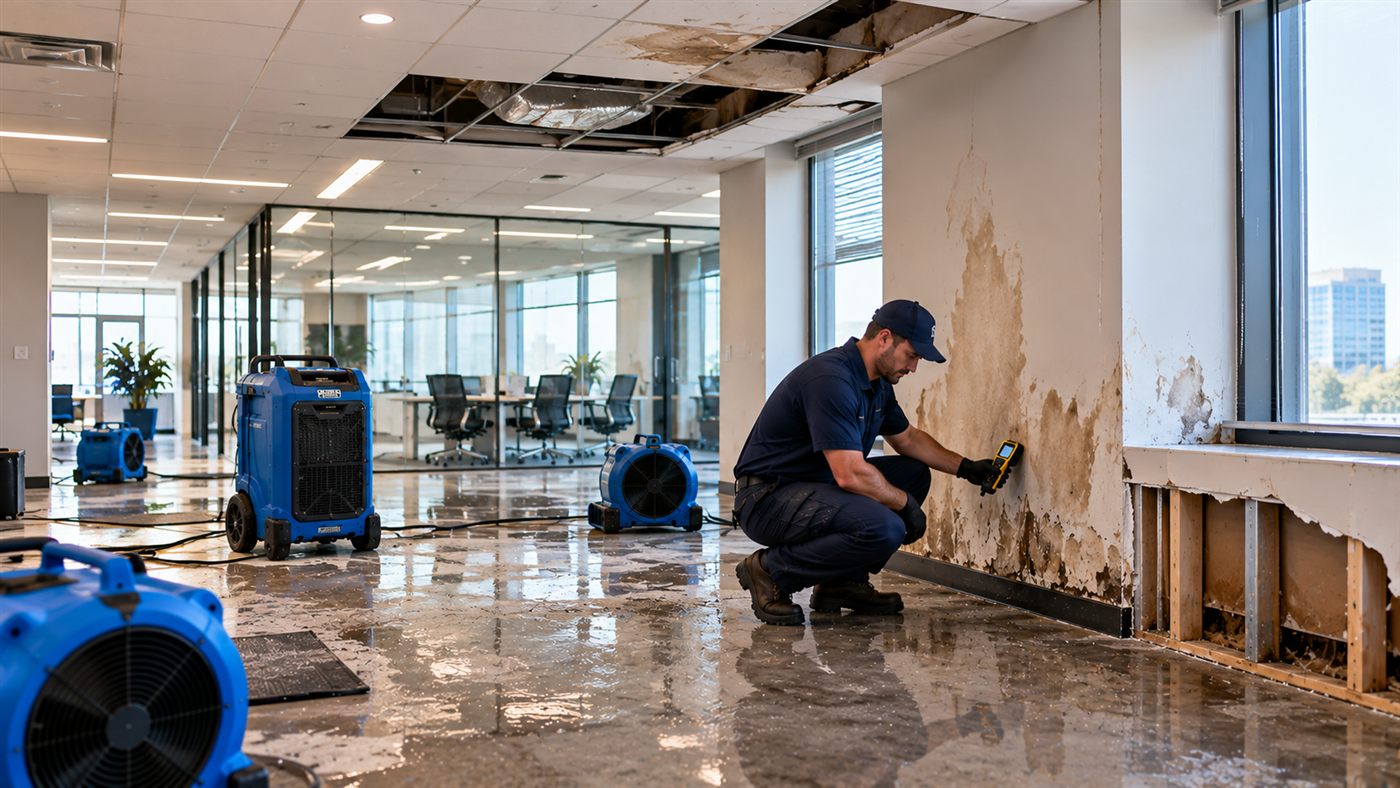
The Flood Repair Sequence
Flood repairs tend to follow a disciplined sequence, because skipping steps can lock in problems.
- Safety clearance and access. Authorities and professionals confirm that entry and work can proceed.
- Water removal and initial cleanup. Standing water, mud and debris are removed with appropriate protection.
- Removal of unsalvageable materials. Materials that are contaminated, saturated or not realistically recoverable are removed under suitable controls, and documented.
- Cleaning and drying. Remaining structural and interior components are cleaned as appropriate and dried, with moisture verified over time.
- Evaluation of building systems. Electrical, mechanical, plumbing and fire protection systems are inspected and repaired or replaced by qualified trades.
- Permits and approvals. Many flood-related repairs require permits, and substantial damage can trigger additional requirements set by local authorities.
- Reconstruction. Framing, insulation, drywall, ceilings, flooring, millwork, doors and finishes are rebuilt.
- Inspection, punch list and turnover.
The repair process and planning guide explains the general framework in more detail, including scheduling, coordination and closeout.
Permits, Codes and Rebuilding Requirements
Flood repairs often trigger regulatory questions that other water losses do not. Local governments administer building codes and floodplain rules, and requirements vary by jurisdiction.
- Permits. Repairs to structural elements and to electrical, plumbing and mechanical systems commonly require permits and inspections.
- Floodplain regulations. Buildings in mapped flood hazard areas may be subject to additional rules, particularly if the level of damage exceeds thresholds set by the local authority.
- Flood-resistant materials and practices. Some jurisdictions or projects call for flood-damage-resistant materials, elevated equipment or other measures during rebuilding.
- Accessibility and life-safety upgrades. Extensive work can prompt reviews of related requirements.
Ask your local building or floodplain administrator what applies to your property. Do not assume that a repair scope prepared for a different kind of loss will satisfy these requirements.
Planning for Occupancy, Operations and Business Interruption
Flood events frequently force closures, and planning the return to operation is a central task.
Questions to work through
- Which areas can reopen first, and which depend on utilities or major system repairs?
- Are temporary operations, relocation or remote work possible while repairs proceed?
- What are the lead times for equipment, electrical gear, doors, millwork and specialty items?
- How will supply chain and contractor availability affect the schedule after a widespread event?
- Which stakeholders, such as landlords, tenants, lenders and insurers, must approve or be informed?
Phasing after a flood
Phasing may prioritize life-safety systems, utilities and building access first, then core operational areas, then finishes and less critical spaces. Communicate the phasing plan to tenants and staff so expectations are clear.
Reducing the Risk of Repeat Damage
Repairs are an opportunity to consider whether the building can be made less vulnerable, within the limits of code, budget and site conditions. Options might include:
- Correcting drainage, grading and stormwater management around the building.
- Repairing or upgrading roof drains, sump systems, backflow devices and sealants.
- Relocating or elevating vulnerable equipment where feasible.
- Selecting more moisture-tolerant finishes and materials for vulnerable areas.
- Developing an emergency response plan with defined shutoffs, contacts and documentation steps.
These are general ideas. Actual measures should be evaluated by qualified design professionals and confirmed with local authorities and insurers.
Evaluating Flood Repair Contractors
After widespread flooding, demand for contractors rises and unfamiliar providers appear. Take extra care.
- Verify licensing and insurance for your state and the type of work.
- Ask for local references and past commercial flood projects.
- Get a written scope and contract rather than relying on verbal promises.
- Be cautious about large upfront payments and pressure to sign quickly.
- Confirm who will pull permits and manage inspections.
- Clarify how hidden conditions and change orders will be handled.
- Coordinate with your insurer on documentation and approvals.
Below-Grade Spaces, Basements and Mechanical Rooms
The lowest levels of a building are usually the first to flood and the last to recover. They also tend to hold the equipment a building depends on.
- Basements and lower levels. Water can remain for days, and pumping must be managed so that the removal rate does not create additional risk to below-grade structures. Decisions about how quickly to lower water levels belong with qualified professionals.
- Mechanical, electrical and utility rooms. Panels, transformers, pumps, boilers, chillers and controls are often located low in the structure. Flooded equipment usually requires evaluation by the manufacturer or a qualified contractor, and some components may need replacement rather than repair.
- Elevator pits and machine rooms. Elevators often cannot return to service until a qualified elevator contractor and the authority having jurisdiction have inspected them.
- Parking structures and loading areas. Drainage, lighting, gates and life-safety systems may be affected, and debris removal can be substantial.
- Storage areas. Stored records, inventory and equipment are commonly documented and handled separately from building repairs.
Because so many essential systems are involved, the recovery of lower levels frequently controls the schedule for the entire building.
Drying, Cleaning and Verification After a Flood
After floodwater is removed, the remaining assemblies still have to be cleaned, dried and verified before they are closed up. This phase is often longer than people expect.
Cleaning
Surfaces that were in contact with floodwater generally need cleaning appropriate to the type of water and the material. The methods, products and protective equipment depend on the conditions, and should be determined by qualified professionals following applicable standards.
Drying
Slabs, masonry and wood framing can release moisture slowly, and conditions inside wall cavities may lag behind conditions at the surface. Drying plans typically combine air movement, dehumidification and monitoring, and may be adjusted as readings come in.
Verification
Documented moisture readings, taken at consistent locations over time, show whether assemblies are actually drying. Closing up walls or installing flooring before verification can lock in problems. Concerns about microbial growth, air quality or other environmental conditions should be referred to qualified professionals, and this guide offers no conclusions about them.
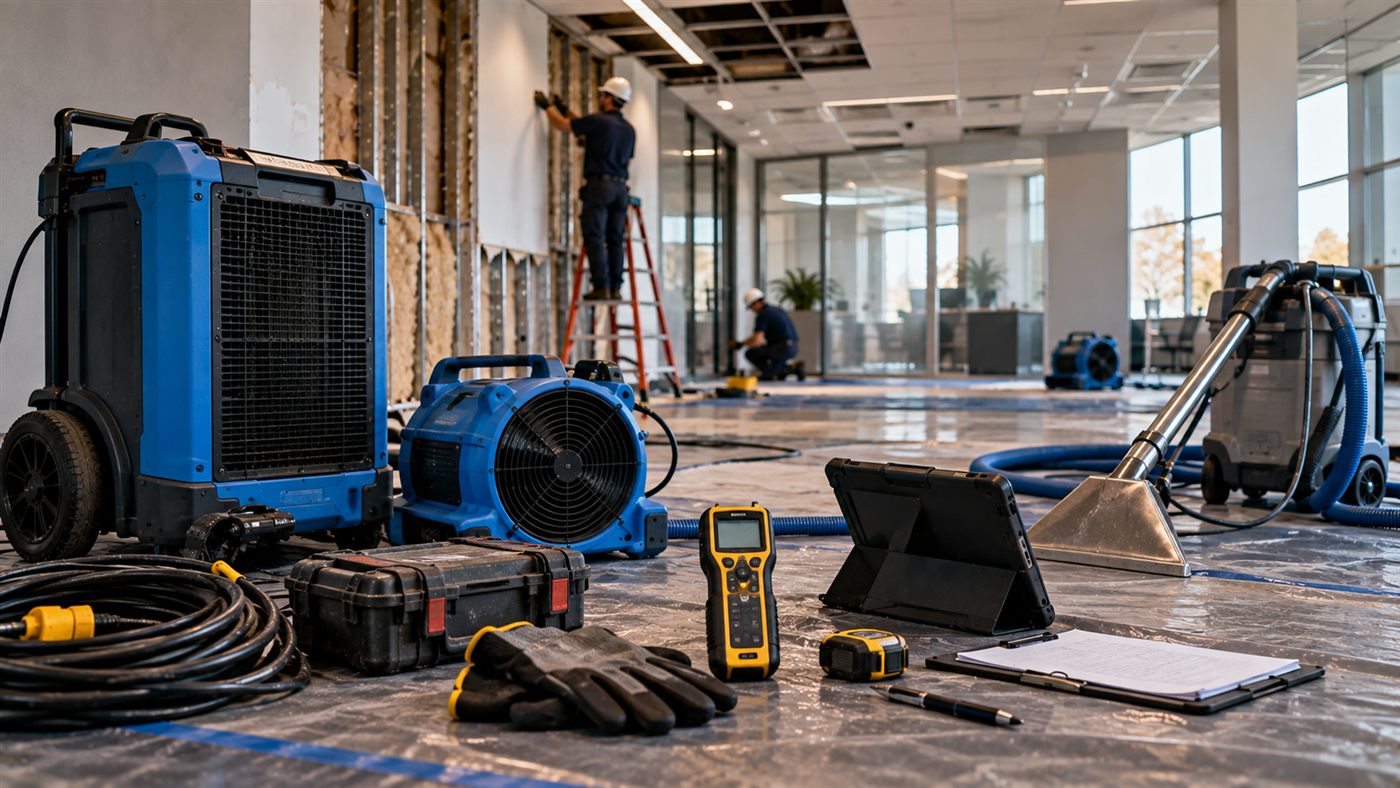
Timing After a Widespread Event
After a regional flood or major storm, many property owners need the same trades and materials at once. Planning for that reality helps set realistic expectations.
- Contractor availability may be limited, and schedules can move as priorities shift.
- Material supply for items such as drywall, flooring, doors, electrical gear and HVAC equipment may be constrained.
- Inspections and permitting offices may be busy, and turnaround times can grow.
- Utility restoration may control when work can begin and when systems can be tested.
- Insurer and adjuster availability may affect the pace of scope approval.
Build extra time into schedules, keep documentation current, communicate with tenants and stakeholders regularly and consider temporary operating arrangements if a return to full occupancy will take a long time.
Questions to Ask Before Signing a Flood Repair Contract
Contracts signed in a hurry are a common source of disputes. Before committing, consider the following.
- Is the scope in writing, with areas, materials, finish standards and exclusions clearly described?
- Who is responsible for permits and inspections, and are the fees included?
- How are hidden conditions, such as damaged framing or systems discovered after demolition, handled and priced?
- What is the schedule, and what could change it?
- What are the payment terms, and how are progress payments tied to completed work?
- What insurance and licensing does the contractor carry, and can you verify them?
- What warranties apply to labor and materials, and how are claims handled?
- How will documentation, photographs and moisture records be shared with you and your insurer?
If something is unclear, ask for it in writing. Where necessary, have your legal counsel or risk advisor review the agreement.
Frequently Asked Questions
Floodwater usually comes from outside, can be contaminated, often affects the whole lower level and commonly involves permits, authorities and insurers. Repairs typically involve more removal, more verification and more system evaluation than a localized interior leak.
Sometimes for durable, non-porous items, but porous and layered materials such as drywall, insulation and carpet are commonly removed after flood exposure, particularly if contamination is a concern. The decision belongs to qualified professionals based on inspection.
Often, yes, especially for structural, electrical, plumbing and mechanical work, and in floodplains. Requirements vary by jurisdiction, so check with your local building or floodplain office.
It varies widely with the extent of damage, drying, permits, inspections, material availability and community-wide demand. A qualified contractor can provide a schedule based on a real assessment.
Licensed, qualified professionals. Do not re-energize or operate flooded electrical or mechanical equipment without their evaluation.
Protective work to prevent further damage generally needs to begin quickly, but you should confirm requirements with your insurer, document everything and keep damaged materials or evidence as advised.
Planning a Flood Repair?
A flood repair project benefits from an organized start. Send a request with your property details, or review the full repair process from scoping through closeout.