The first 72 hours of repair work
Emergency Commercial Water Damage Repair
Emergency commercial water damage repair means making the building safe and protected so permanent repairs can be planned properly.
What “Emergency Repair” Means in a Commercial Building
When water damages a commercial property, the first days are dominated by urgent work. That work is often called emergency repair, emergency services or mitigation, and the terms are used loosely. In practical terms, emergency commercial water damage repair covers the actions taken right away to stop further damage, make the space safe to enter and protect what has not yet been harmed. It is not the same as the permanent repair and reconstruction that comes later, and confusing the two leads to unrealistic expectations about what an emergency visit will accomplish.
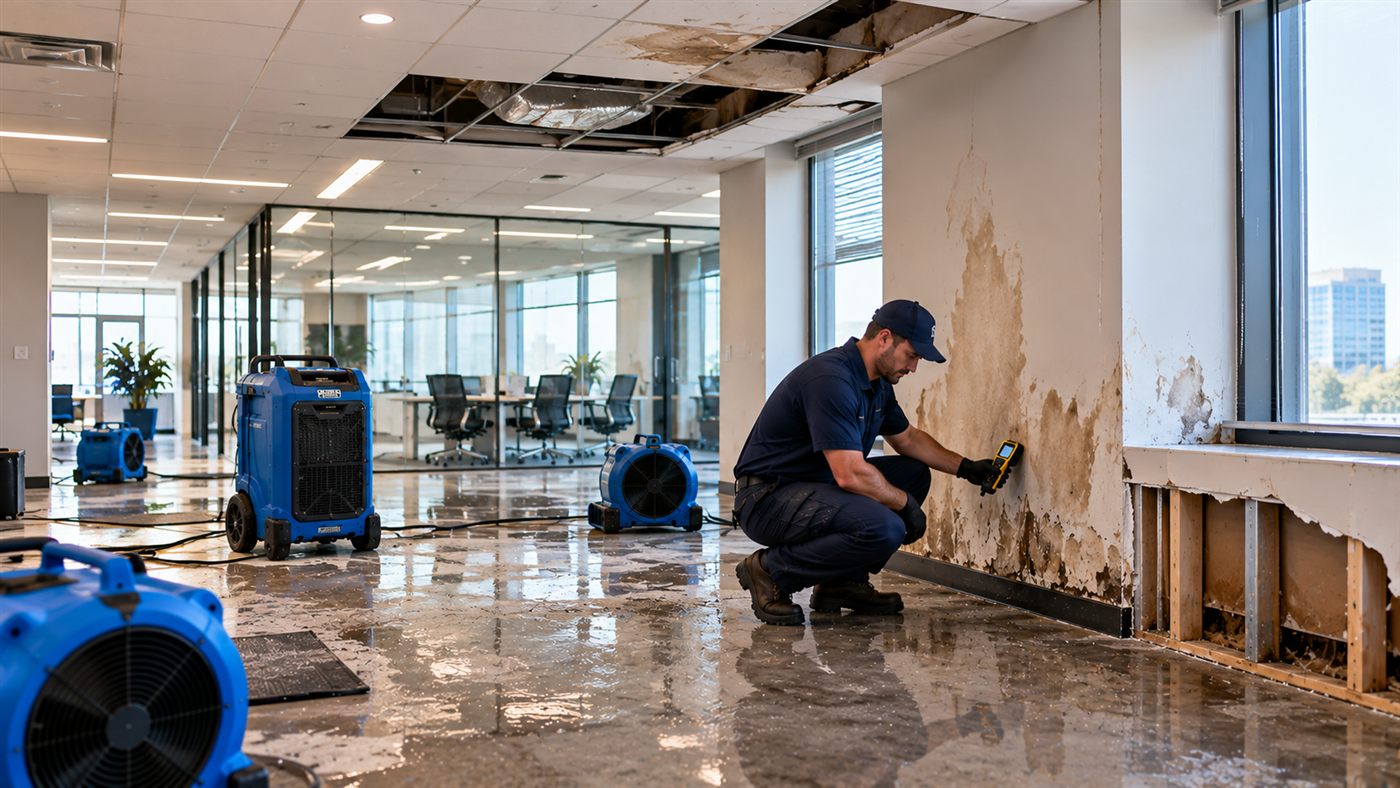
An emergency crew typically does not hand the space back in finished condition. What they aim to do is stabilize it. They help control the source, reduce the spread of water, remove standing water, protect surfaces and contents, begin drying and document conditions. The results of that first phase then shape the permanent repair scope: what remains wet, what has been damaged beyond recovery and what can be saved.
This guide explains what commonly happens during that first phase, why it affects your eventual repair, and what business owners and managers can do to make the transition from emergency work to permanent repair go more smoothly. It is general information, not a substitute for on-site professionals.
Safety comes first. If there is any risk to people, including electrical hazards, gas odors, sagging or falling ceilings, structural concerns or people in flooded areas, call 911 and keep everyone out of the danger zone. Property protection is always secondary to human safety.
The First Hours: Priorities in Order
Although each situation differs, the priorities in the first hours are usually consistent. Doing them in the right order tends to reduce total repair scope.
1. Protect people and control hazards
Water and electricity are a serious combination, and wet ceilings can fail without warning. Building staff and responders commonly evaluate whether power should be shut off to affected areas, whether ceilings or floors are safe to occupy and whether the space should be closed. Decisions about electrical systems and structural safety belong to qualified professionals and the authorities responsible for them.
2. Stop or isolate the source
Repair cannot begin while water is still arriving. Depending on the cause, that may mean closing a valve, isolating a plumbing branch, shutting down a fire sprinkler zone through the proper responsible party, clearing a drain, or temporarily covering a roof opening. Correcting the underlying defect may require a plumber, roofer or other specialty trade, and often happens after the immediate emergency.
3. Document before anything is moved
Photographs and video of affected areas, equipment, inventory and finishes protect your records. Documentation before cleanup begins is especially useful when materials will later be removed. Notes about when the water was discovered, when the source was stopped and who was contacted are also valuable.
4. Remove standing water and begin protecting surfaces
Extracting standing water quickly limits how far it travels into walls, flooring and substrates. Protective measures for furniture, casework and equipment, where safe, reduce secondary damage.
5. Start moisture control and drying
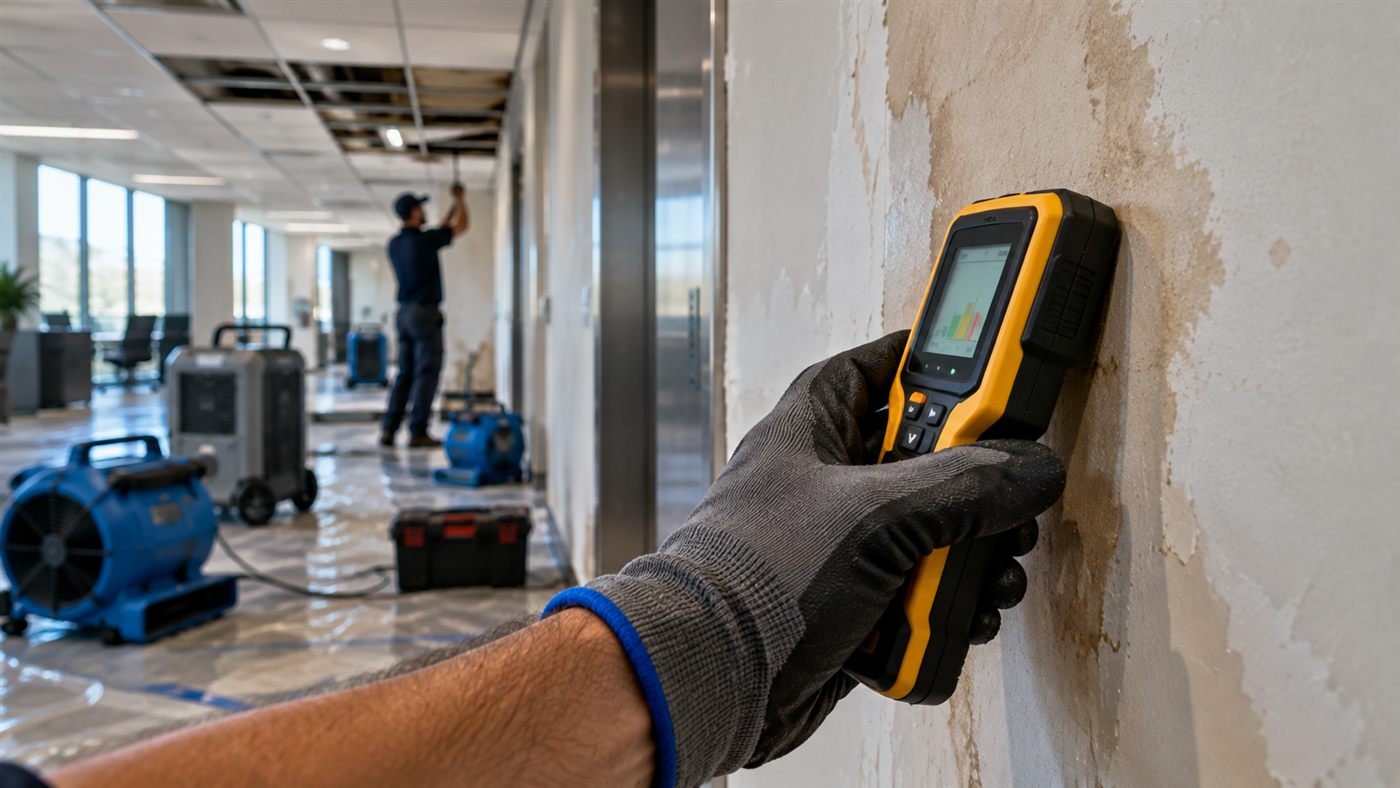
Drying equipment, air movement and dehumidification may be set up, and initial moisture readings establish a baseline. Whether a given material can be dried successfully is not usually known on day one.
Common Emergency Repair Measures
The following measures are often part of the first phase of commercial water damage repair. Not every job needs all of them, and the appropriate combination depends on the conditions found.
Water extraction
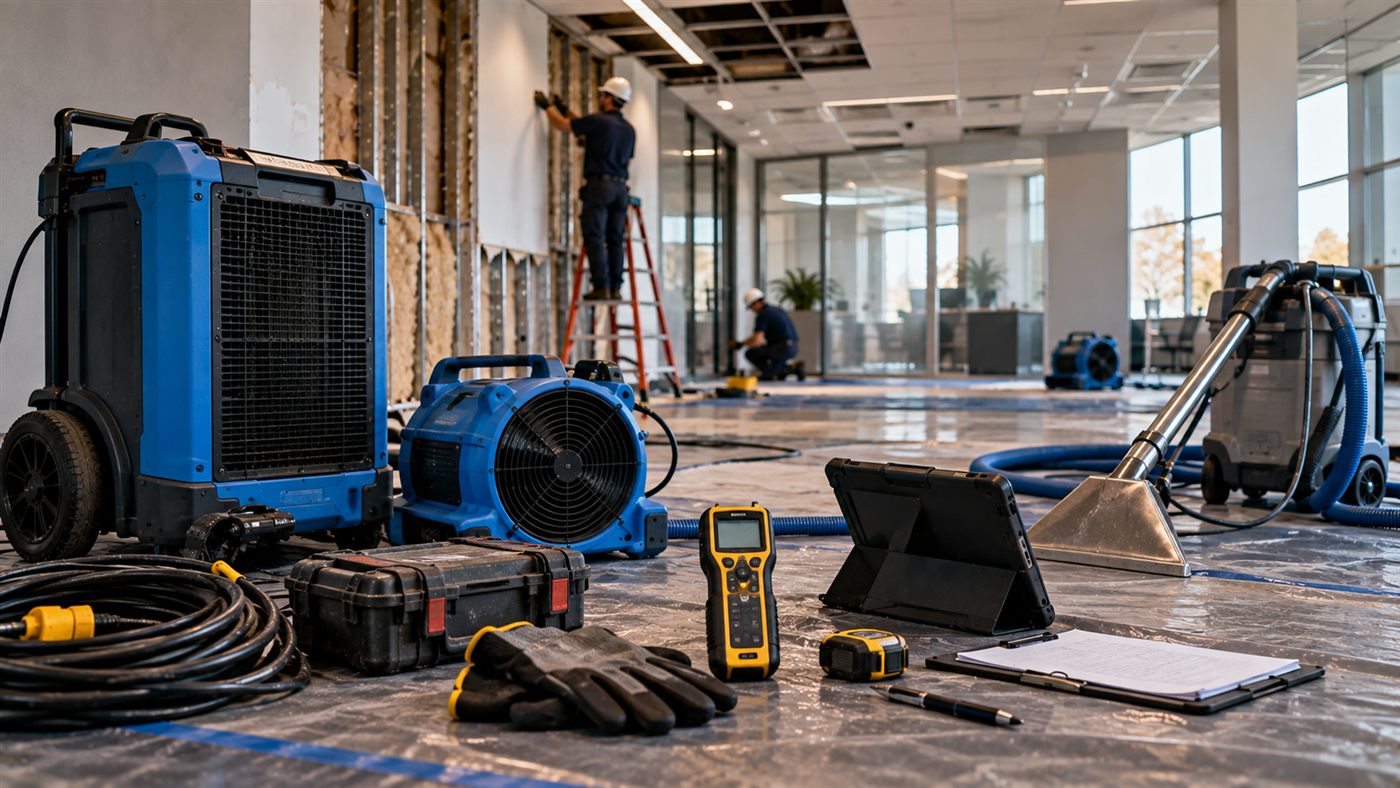
Pumps and extractors remove standing water from floors and low areas, reducing how much reaches substrates and adjacent spaces.
Temporary roof or envelope protection
Tarping, sealing or temporary covering of a roof, wall or window opening keeps additional rain or weather out until permanent work can be done.
Board-up and security
Temporary covering of broken glazing, doors or storefront openings protects the property and limits unauthorized access.
Controlled demolition
Removing wet ceiling tiles, saturated insulation or certain wall materials early may speed drying and prevent further spread. It should be done with documentation and appropriate controls.
Contents protection
Moving, blocking up or covering furniture, equipment and inventory reduces damage where it can be done safely.
Drying setup
Air movers and dehumidifiers are placed and monitored, with readings recorded so progress can be tracked.
Why some removal happens so early
It may seem counterintuitive to take things apart on the first day, but removing water-soaked materials that cannot realistically be saved, such as saturated ceiling tile or waterlogged insulation, can help air reach the remaining assemblies. Early removal also reveals how far the water traveled. The key is that removal is deliberate, documented and limited to what is justified, since unnecessary demolition adds to the eventual repair scope and cost.
Temporary Repairs vs. Permanent Repairs
An important distinction in commercial work is between temporary protective measures and permanent corrections. A tarp on a roof is not a roof repair. A patched supply line is not necessarily a compliant plumbing repair. Board-up is not a storefront replacement. Temporary measures buy time and prevent further damage, and permanent repairs follow once conditions are understood, materials are available and approvals are in place.
- Temporary measures are quick, protective and often removed later. They are designed to hold for a limited time.
- Permanent repairs meet applicable codes and manufacturer requirements, are designed to last and are typically inspected where required.
- The handoff between the two should be planned, with a clear record of what was done temporarily and what remains to be corrected.
Ask any provider to state clearly which work is temporary and what the plan and timeline are for permanent correction. Leaving a temporary fix in place indefinitely can lead to repeat damage and disputes.
How Emergency Decisions Affect the Permanent Repair Scope
The first 72 hours often decide how large the repair project becomes. Several factors are especially influential.
- Speed of source control. The sooner water stops, the less area is affected.
- Speed and quality of extraction and drying. Materials that dry promptly may stay in place, while those left wet for extended periods are commonly removed.
- Documentation. Clear before-and-after records support accurate scopes and defensible claims.
- Extent of early demolition. Enough to prevent spread and allow drying, but not so much that salvageable materials are lost.
- Moisture verification. Readings taken over time, rather than assumptions, show when assemblies are actually dry enough to close up or refinish.
Emergency providers and repair contractors are sometimes the same company and sometimes different ones. When they are different, ensure that moisture logs, photographs, scopes and contact information are shared, so the repair contractor does not have to start from scratch.
Water Type and Why It Changes the Plan
Not all water is the same. Industry documents commonly describe categories based on the likely level of contamination, and the category influences which materials are removed and what precautions are used.
- Clean water sources, such as a broken supply line, may be less concerning at first but can become more so as time passes.
- Gray water, such as certain appliance or drain discharge, may contain contaminants.
- Black water, including sewage and many flood conditions, is generally considered highly contaminated.
Assessment of water type, and any related health or environmental concerns, should be handled by qualified professionals following applicable standards and regulations. This guide does not offer conclusions about contamination or health effects, and repair decisions in contaminated conditions often involve more extensive removal and specialized procedures. See the flood damage repair guide for how floodwater changes the picture.
Emergency Repair in an Occupied Building
Many commercial properties cannot simply shut down, so emergency work has to be coordinated with continued operation, or a controlled partial closure.
Questions to settle quickly
- Which areas are unsafe or must be closed off?
- Can critical operations continue elsewhere in the building?
- Who is responsible for notifying tenants, staff and customers?
- What are the building rules for after-hours access, elevators, loading docks and contractor insurance?
- Are there sensitive spaces, such as clinical areas, food preparation areas or data rooms, that require special handling?
Multi-tenant considerations
In a multi-tenant building, water frequently crosses tenant boundaries. Responsibility for common systems, shared walls and ceilings and above-ceiling spaces may be divided between the landlord and tenants under lease terms. Involve property management early, and keep records of who authorized what.
What Owners and Managers Can Do Right Now
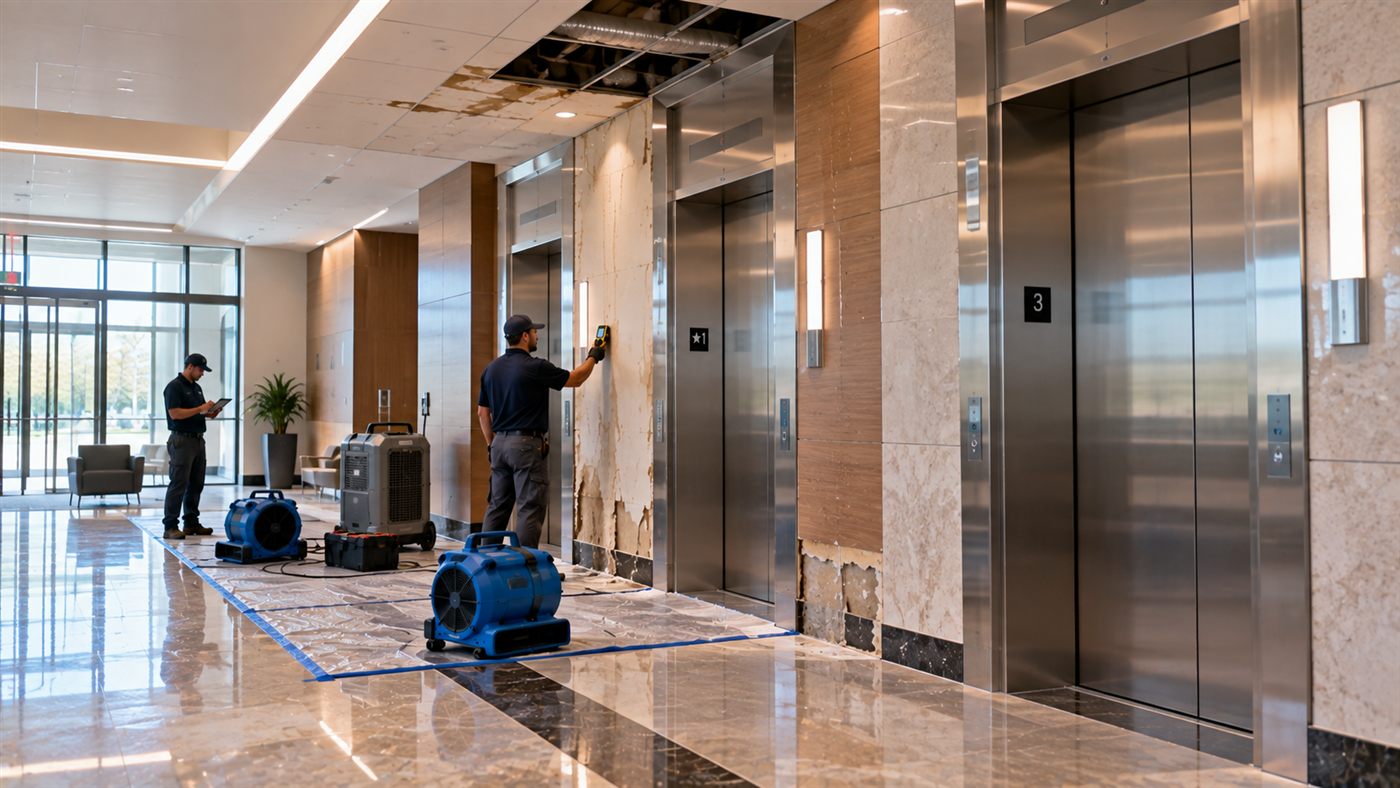
While professionals handle technical work, there are practical actions that help.
- Get everyone to safety and restrict access to hazardous areas.
- Know where your water shutoffs are and, if it is safe and you are trained to do so, stop the source.
- Photograph and video the damage before cleanup begins.
- Notify your property manager, insurer and any relevant stakeholders promptly and follow your policy’s notice requirements.
- Contact a qualified commercial restoration provider and, where needed, specialty trades.
- Keep a written log of times, actions, calls and decisions.
- Retain damaged materials only where advised, and avoid discarding items that may need to be inspected or counted.
- Ask providers to describe scope, assumptions and the difference between emergency and permanent work in writing.
What to avoid
- Entering areas with standing water near electrical equipment or sagging ceilings.
- Assuming that drying happened because surfaces feel dry to the touch.
- Allowing extensive demolition without documentation.
- Signing broad work authorizations without understanding what they cover.
- Delaying notice to your insurer or property manager.
Handing Off From Emergency Work to Repair
The end of the emergency phase is not a single moment. It is when the source is controlled, the building is safe, standing water is gone and drying is under way. At that point the project usually transitions to a longer stage of verification and scoping.
A good handoff includes moisture readings, photographs, a description of removed materials, a record of temporary measures still in place and an outline of what remains uncertain. From there, the repair process and planning guide covers how reconstruction is scoped, scheduled and closed out, while the interior repair guide discusses the materials involved.
Emergency Repair Priorities by Source of Loss
The cause of the water affects which emergency measures are used and who is needed on site. The following summaries are general, and actual conditions should be evaluated by qualified professionals.
Plumbing failures
Stopping the flow at a valve, isolating the affected branch and calling a plumber are usually first. Water often travels through ceilings and walls to lower floors.
Roof and envelope leaks
Temporary protection such as tarping or sealing may be needed, and a roofer should evaluate the source. Insulation and ceilings below may hold water.
Fire sprinkler discharge
Sprinkler systems are life-safety equipment. Shutting down or restoring a system should be handled by the appropriate responsible parties and follow applicable requirements.
HVAC and condensate
Overflowing drain pans, failed lines or leaking coils can wet ceilings and equipment areas. The equipment may need service before it is safe to operate.
Storm and drainage
Wind-driven rain, clogged drains and backups can cause widespread intrusion. See the flood damage repair guide.
Working With Property Managers, Insurers and Trades in the First Days
Emergency work moves faster when the right people are informed early and everyone knows who is responsible for what.
- Property manager or landlord. Notify them right away in leased buildings. They may control building systems, access and required contractors.
- Insurer or broker. Report the loss according to your policy and ask what they expect regarding mitigation, documentation and approvals.
- Restoration provider. Ask for a written description of the work being performed, and for moisture readings and photographs to be kept.
- Specialty trades. Plumbers, electricians, roofers, HVAC and fire protection contractors may each be needed to correct causes or make systems safe.
- Tenants and staff. Tell them what areas are closed, what to avoid and how to reach you.
Keep one written log of decisions and contacts. When the emergency phase ends, that log becomes part of the record that informs the permanent repair.
Frequently Asked Questions
It is the urgent set of actions taken immediately after a water loss to make the property safe, stop further damage and begin drying. It usually includes source control, water extraction, temporary protection and initial documentation, and it precedes permanent repairs.
As soon as it is safe. Water continues to spread and materials continue to absorb moisture over time, so prompt response is generally recommended. Specific timelines depend on the loss, and your provider can advise on urgency for your situation.
No. Emergency repair is protective and often temporary. Permanent repair restores the damaged components to a finished, code-compliant condition, and typically occurs after drying and evaluation.
Sometimes. They may remove materials that are clearly unsalvageable or that must come out to allow drying. The extent depends on the conditions, water type and professional judgment, and it should be documented.
Report the loss promptly and follow your policy’s notice requirements. Protective work to prevent further damage often needs to start quickly, so ask your insurer what they expect and keep records of everything done.
Sometimes, in unaffected or safely separated areas. That is a safety and building-rules decision that should involve responders, your contractor and the property owner.
Need Help Organizing Your Repair?
Once the emergency is under control, the next step is a clear plan. Read the repair process guide or send a request with the details of your property.