Contact and project preparation
Request Commercial Water Damage Repair Assistance
Commercial water damage repair assistance starts with clear facts about your property, the damage and your timeline.
Before You Reach Out
If anyone is in danger, call 911 first. Electrical hazards, gas odors, sagging ceilings, structural concerns, injuries or people in flooded areas are matters for emergency responders. Property protection always comes second to human safety.
If the situation is safe, the most useful step is to collect the basic facts. Contractors, insurers and building professionals ask similar questions, and having answers ready speeds every conversation and leads to a more accurate repair plan.
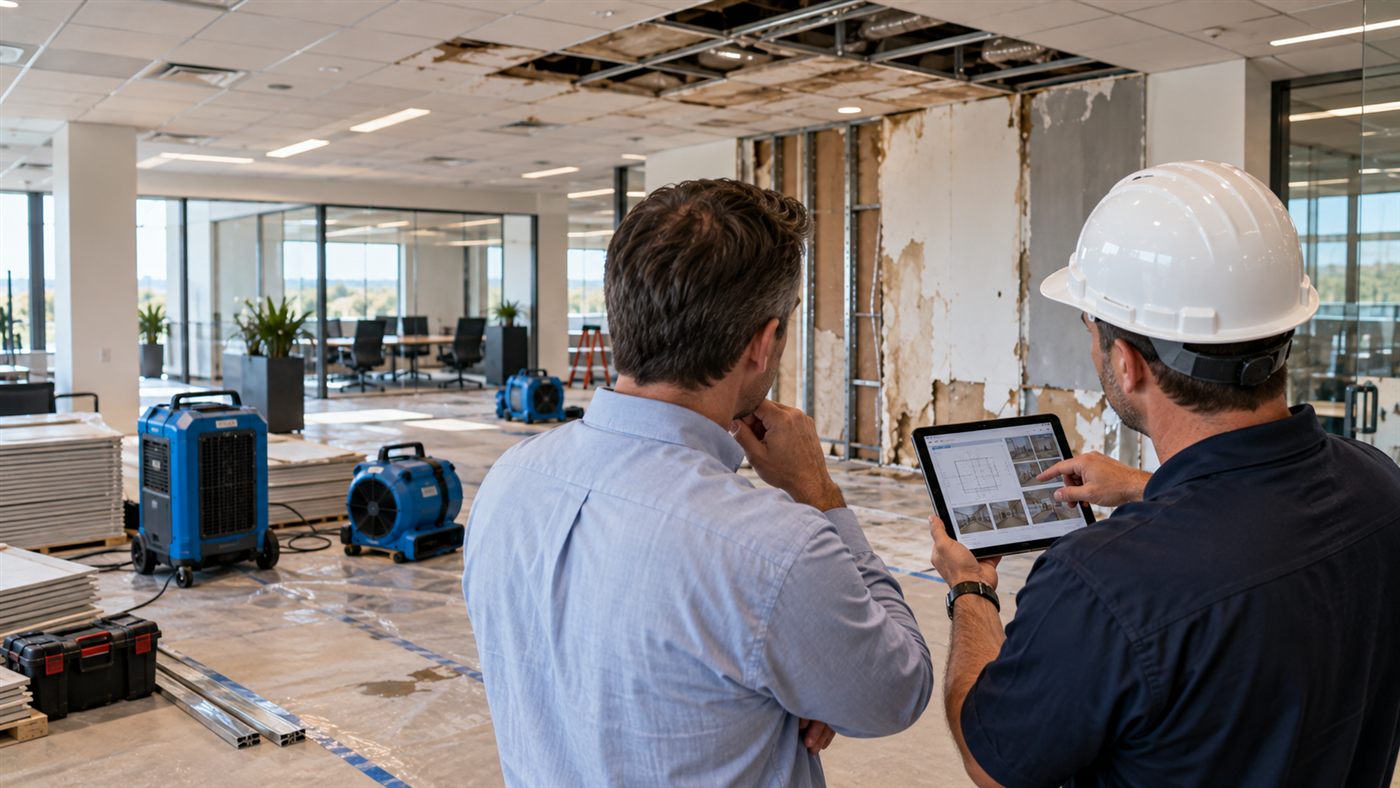
About this website. This is an educational resource about commercial water damage repair. It does not perform repair work and does not provide legal, insurance, engineering or safety advice. For on-site help, contact a qualified local restoration or construction professional in addition to sending a request here.
Information to Gather
You do not need everything on this list to get started. Share what you know.
- Property details: type of property, number of floors, approximate size, age and the city and state.
- Your role: owner, property manager, tenant, facility manager or other.
- Source of water: known or suspected cause, such as a plumbing failure, roof leak, sprinkler discharge, storm or flood, and whether it has been stopped.
- Timeline: when the water was discovered and when the source was controlled.
- Affected areas and materials: rooms, floors, ceilings, walls, flooring, millwork and equipment involved.
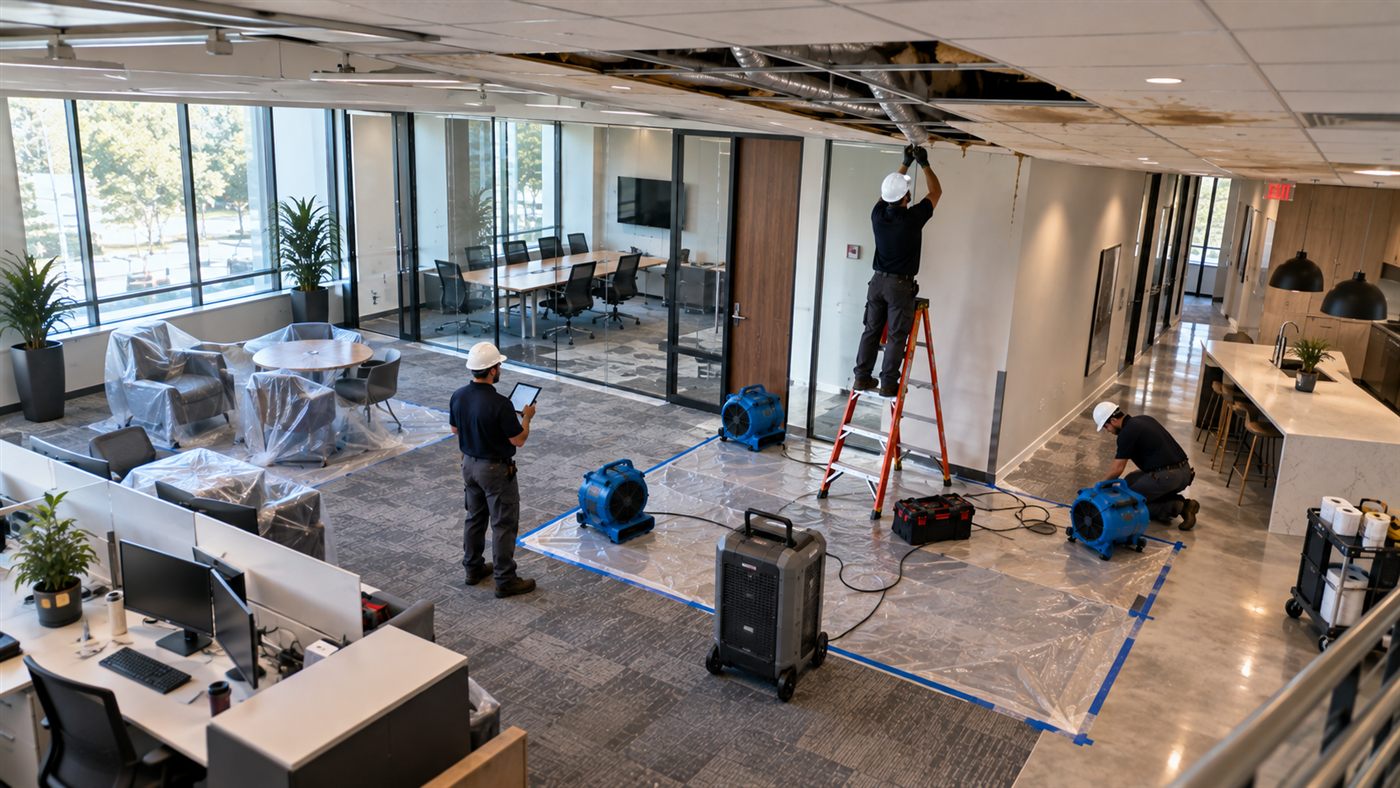
- Emergency work done so far: extraction, drying, demolition or temporary protection, and who performed it.
- Occupancy: whether the building is occupied and whether operations must continue.
- Insurance and approvals: whether the loss has been reported, and any landlord or property manager requirements.
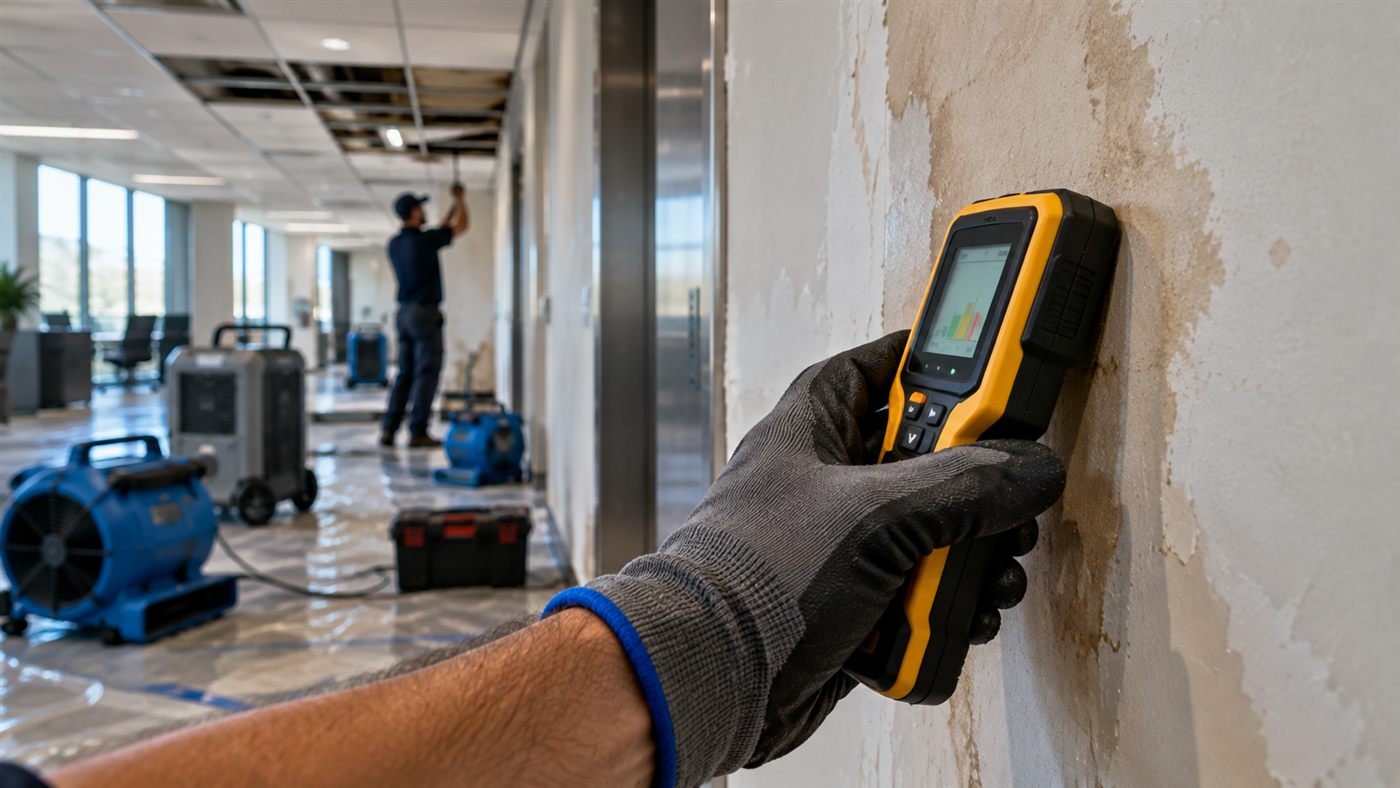
- Documentation: photographs, video, moisture readings and notes.
- Goals and deadlines: reopening dates, phasing needs or lease and event deadlines.
Describing Your Situation
Emergency
Water is active or hazards exist. Call 911 for danger and contact a local restoration provider immediately. See the emergency repair guide.
Repair planning
The water is controlled and drying is under way, and you need to define the repair scope. See the repair process guide.
Flood or storm loss
Floodwater or storm intrusion is involved. See flood damage repair for commercial buildings.
How to Send Your Request
Email info@commercialwaterdamagerepair.us with the subject line “Commercial water damage repair request” and include the information above in plain text. Attach photographs if the file sizes are reasonable. Please do not include payment card numbers, bank details, passwords or other sensitive personal information.
Information you send is used only to respond to your request. Email is not a secure channel, so share only what is needed. Replies provide general guidance and direction to resources and are not legal, insurance or engineering advice.
Frequently Asked Questions
No. This site provides educational information and a way to organize your request. For emergencies, call 911 if there is danger and contact a qualified local provider for on-site help.
Property type and location, the source and timing of the water, affected areas, whether the building is occupied and whether you have reported the loss. Photographs and notes are very helpful.
This site does not endorse specific companies. The repair process guide explains how to evaluate providers on licensing, insurance, experience, scope clarity and communication.
Not Sure Where to Start?
The repair process guide walks through assessment, drying, scope, reconstruction and closeout so you know what to expect.